
Being More Human
On Josef Pieper's Definition of Virtue

Modern society is so ruled by fake virtue that when we hear the words “be a good person” it immediately makes us suspect that the person making the command is unspeakably evil and untrustworthy. To be “virtuous” in modern parlance means to tolerate every kind of evil and dysgenic thing that people get up to in their personal lives from child sacrifice to sexual degeneracy to good old fashioned unapologetic selfishness that markets itself as “self-care”. The most virtuous people today are the ones who have distanced themselves from the word “good” like a taboo that has come to mean its inverse. Ironically, those who are always trying to be “good” are also the ones who are the most mentally ill.
But Virtue once meant something and I wanted to explore the concept from the time before its meaning was perverted. Interestingly, the time before a lot of this modern subversion of the most basic ideas, is also a time that feels more human to me. Because of AI, so much of my generation and the ones that come after me will occupy their time in fascination with what humanity really is and a lot of that is inextricably tangled up with the meaning of virtue.
The Virtue of a Human
The virtue of something is the quality by which it becomes itself. The virtue of fire is heat, the virtue of water is wetness, so what is the virtue of a human? In a world taken over by machines and artificial intelligence, many turn toward the physicality of the person in order to understand what it is that makes us human. This impulse is correct but it is also only half the story. There is also something immaterial that cannot be replicated in a machine and that is the human soul.
Discussions in modern psychology fail because they neglect the first part of the word “psychology” which is “psyche”, an ancient word that means soul. The soul is immanent to our humanity, and the soul is a thing that, like a body, can be healthy and unhealthy.
Taken in this way, then, virtue is the behaviour or set of qualities that makes the soul healthy whereas vice is the behaviour that makes the soul unhealthy. Just as a healthy human body looks more human than a deformed one, so a healthy human soul looks more human than a deformed one.
The pursuit of a healthy soul is the subject of the long forgotten Christian idea of virtue and it is the exact area of study and philosophy whose neglect has given way to the dysfunctional science of “modern psychology,” that has created more psychologically sick people than hitherto seen by any civilization.
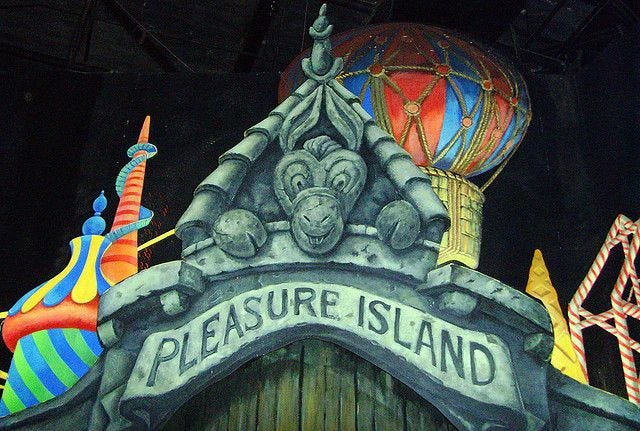
Modern answers about how to be a “good person” seem poisoned with politics and ideology that twists into horrifying dystopias when taken to their logical conclusions. This is because the objective of modern psychology is personal comfort and a vague idea about individual “fulfilment”. An excellent example of the endpoint of modern psychology is described in Aldous Huxley’s famous novel, Brave New World, where there is no true joy but an abundance of pleasure, a pleasure so oppressive and empty that it leads the main character to take his own life.
Conversely, the objective of Classical Christian virtue is communion with the truth through reason and that truth is the eternal love of God which reflects in the way that we treat each other and create a beautiful and functional civilization. Individual fulfilment is a byproduct rather than a primary objective of classical virtue.
To find out the answer to this question of human virtue, I delved into Josef Pieper’s book The Four Cardinal Virtues (1955) and his answers were simple, coherent, and corroborated by my own experience and perception of reality.
“The road to hell is paved with good intentions”
