
Elsa was Evil: the Inverted Morality of Frozen
How to protect your children from Moral Terrorism in modern stories

You will realize just how much modern culture hates your daughters when you see the truth behind Frozen. The merchandise for the 2013 Disney movie is everywhere: backpacks, water-bottles, dolls, notebooks, all adorned with the smiling duo of Anna and Elsa. Who are these characters they are pushing on your daughter? Are they good?
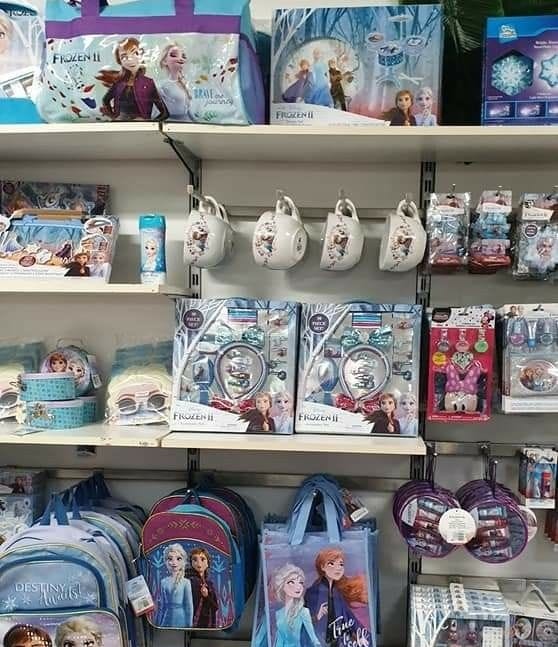
As parents our job is to curate the media our children consume. Unfortunately, Frozen is so pervasive that it will be hard for your children to escape it. In this essay I explain why the story of Frozen is a form of moral terrorism on your children and especially your daughters, and how to protect their moral sense in general against other stories like this that they’ll inevitably encounter. Catchy songs and the vibrant animation can distract us from deeper, insidious, messages but we must be alert and awake; giving the mainstream media the benefit of the doubt is a mistake.
Raising girls with solid, good, moral compasses is no simple task in a culture that is hell-bent against it (pun intended). Let us begin with the story that Frozen is based on…
Devil’s Glass
The story of The Snow Queen (1844) by Hans Christian Andersen begins with an evil mirror, crafted by the devil himself. Its deviousness lies in the fact that it shows things the opposite of what they are. Good looks evil, beauty looks ugly and conversely, evil looks virtuous and ugliness looks good.
At the beginning of the story, while the devils carry this mirror up and up to heaven in order to laugh at God Himself by inverting His reflection, they drop it and it breaks into a trillions of pieces. Some of these pieces land on earth and pierce the eyes of people to invert their vision, and into their hearts to invert their sense of morality.
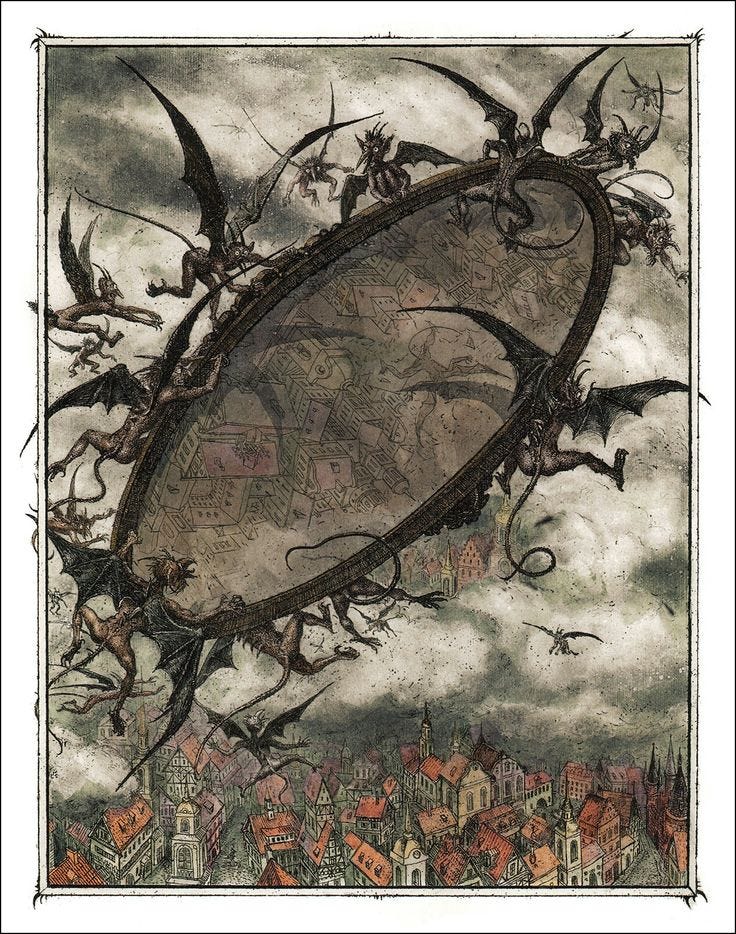
Though this story was written nearly two hundred years ago, well before the internet and its devices captured society so profoundly, its message feels urgently relevant. So many of society’s ideas about morality, heroism and virtue seem not merely wrong, but completely inverted.
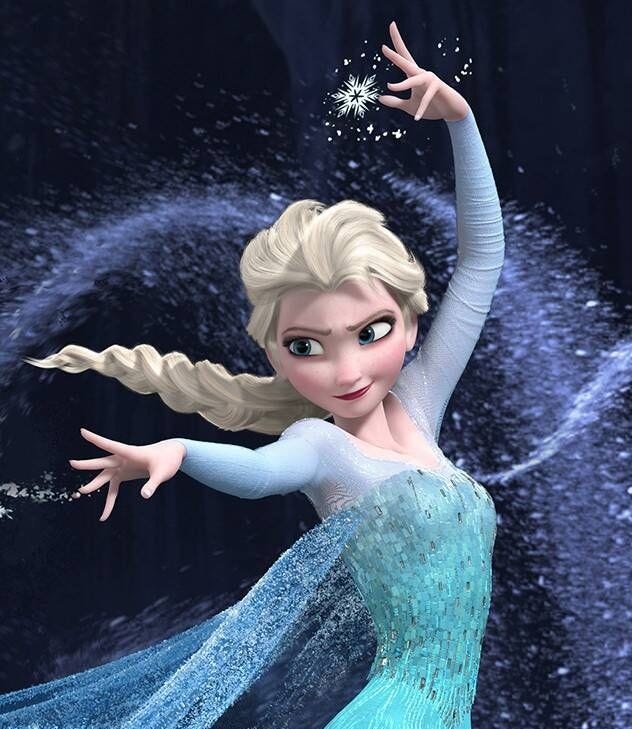
One of the most egregious examples of this, ironically, is in Disney’s retelling of the Snow Queen, Frozen (2013). The villain of the Snow Queen becomes the heroine in Frozen as Elsa, a misunderstood princess with superpowers she “just hasn’t learned to control yet”. Frozen shows selfishness as freedom, permissiveness as love.
Anna vs Gerda - Into the Enchanted Land
In the original Snow Queen, Gerda and Kay are two children with a beautiful friendship that shows the budding qualities of what will be romantic love when they are older. When a piece of the devil’s mirror lands in Kay’s eye and his heart, he grows to despise Gerda. One winter’s day the Snow Queen comes into town and kidnaps Kay, and he cannot escape because the shard of devil’s glass has made him forget his prayers. (Saying his prayers would have released him from the Snow Queen’s spell)
After his disappearance, everyone believes that Kay is dead…except for Gerda. Out of true love for her friend, and nothing but faith that he is alive, Gerda sets out on the river to find Kay.
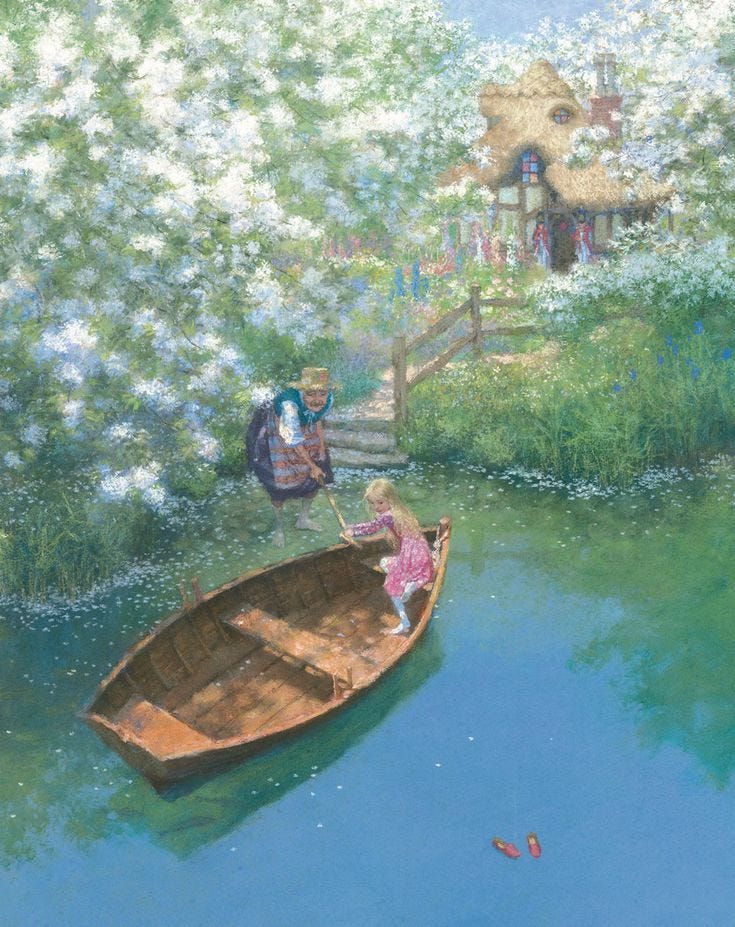
This river is the pathway into the land of enchantment where the story takes place. The key step to being a hero is turning the key, stepping over the threshold, into the woods, through the looking glass. This is the point at which the hero or heroine becomes bewildered and the laws of the normal world no longer apply.
The analogous character to Gerda is Anna in Disney’s Frozen. Instead of a boy in the story, Anna’s relationship is with her sister Elsa. The character Elsa in Frozen consumes the character of both Kay and the Snow Queen as the missing sibling and the witch.
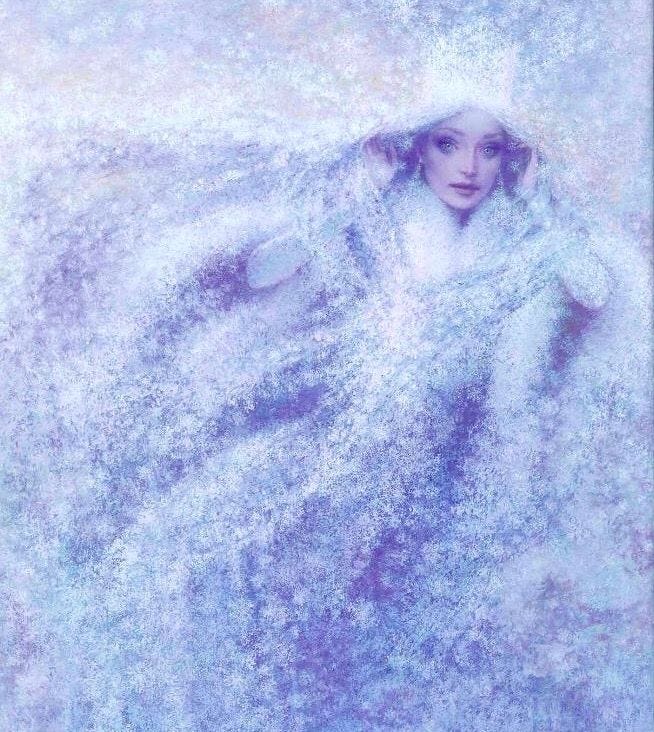
In Frozen, Elsa is a princess with the superpowers of the Snow Queen: to command the frost and the snow, to freeze things and to generate snow storms and great blizzards. When Anna and Elsa’s parents die, Elsa is left to govern the kingdom of Arendelle as Queen. Overwhelmed by the responsibility of governance and keeping her strange and dangerous powers a secret, Elsa accidentally starts a deadly blizzard. Instead of staying and dealing with it, she decides to run away and create an ice palace for herself to hide in. Anna pursues her sister, Elsa, to bring her back and save Arendelle.
It is interesting to note that even here, Disney couldn’t resist killing off some parents. The storytellers there seem to relish in the pathos of parricide as a plot device, as if children cannot have agency in their own stories except when they step on the corpses of their parents.
The Dis-enchanted Princess
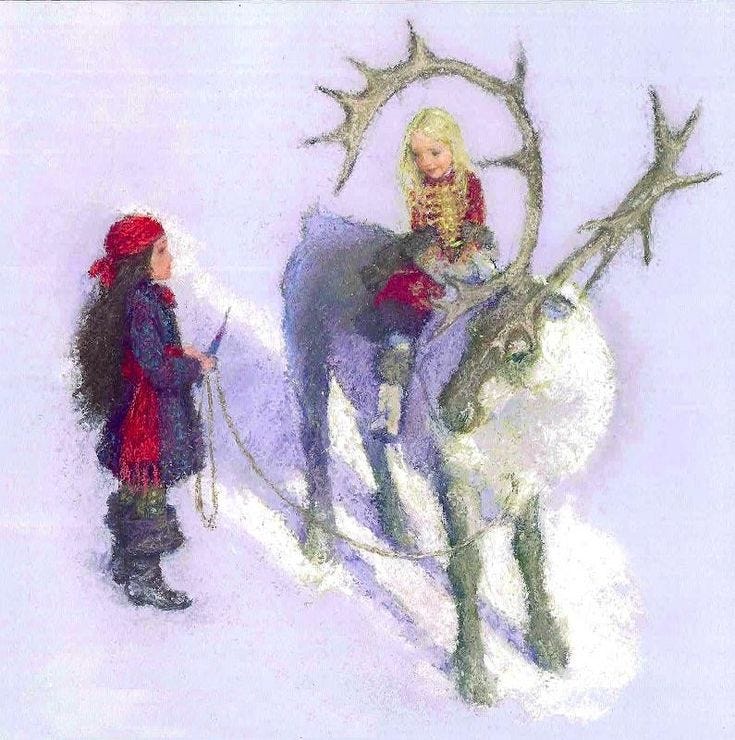
Gerda encounters many different interesting characters and situations before she finally finds a way to reach the Snow Queen’s palace. One of these characters is a witch who attempts to make her forget where she is going and trapping her in an edenic garden. Another character is a magical speaking crow, and a Prince and a Princess. Another is a gypsy woman and her deadly daughter who gives her a reindeer to take her up, up far north where only strange hermit women live alone in their cottages. The hermit women help her on the final stretch to the Snow Queen’s palace. All the characters who help Gerda reveal that they did so because of her innocence and her pure love for her friend. Conversely, Anna’s innocence in Frozen is portrayed as buffoonery. The devil’s glass is once again playing tricks on us.
There is a love story in Frozen as well between Anna and Hans. The opening song where they meet and fall in love at their first meeting is played as a joke to ridicule the Old Disney concept of love at first sight as something immature and childish. I’ve written more about this here. Anna’s innocence and willingness to love openly and with her whole heart is ridiculed as immature and stupid by Frozen.
When Gerda encounters the magical henchmen of the Snow Queen, waiting for her at the gate, she generates a legion of angles to protect her as she repeats The Lord’s Prayer and it turns the mist around her into an army of angels. She is able to break through the Snow Queen’s palace and finally rescue Kay because she has help from God to enter unharmed and to reach Kay while the Snow Queen has gone away. Without this advantage, Gerda would have never been able to rescue Kay.
The story of Frozen is secular and dry in comparison and despite the presence of the supernatural in its universe, it is completely un-enchanted by it on a spiritual level.
“Let it Go!” The Anthem of Selfishness
Elsa is incredibly cruel to Anna when she finds her. Anna finds that Elsa cares about nothing but herself. Elsa’s leading song “Let it Go” is a call to abandon all your responsibilities for personal gratification. “Let it go” proclaims that any time a woman, or in this case a monarch, has to exercise temperance of her emotions and behaviour, or quell her own hedonistic desires to fulfill her responsibilities, it is a form of oppression to her that she ought to break free from. This thought pattern presents in a myriad ways in modern culture that targets women to make them resent any roles other than transactional employment.
Some of the lyrics in the song Let it go are, “No right, no wrong, no rules for me, I’m free”. How many girls are innocently singing along to this anthem to selfishness and entitlement? How many of them will then go on to internalise this message as adults?
Based on the behaviour of grown women in the modern west, it is clear this messaging already has a stronghold on the female psyche that seems to perceive motherhood and marriage as oppression primarily because she has to spend a significant part of her day thinking about and helping others. A mother having to remember her children’s doctors appointments and pick up laundry to put in the washing machine is “emotional labour” that instagram tells her she ought to be compensated for.
The logic of Curses and Redemption
When Anna attempts to convince Elsa to come home and end the blizzard that is endangering the lives of her people, Elsa, in a fit of passion, strikes Anna with her powers and in doing so begins the process of a slow death for Anna. The only thing that can save Anna is “an act of true love”. Anna then rushes home to Arendelle to get a kiss from her boyfriend Prince Hans only to discover he never loved her at all and leaves her to freeze so that he can usurp the throne.
Prince Hans then tries kill Elsa. However, Anna jumps in to save Elsa and takes the sword which freezes on impact with the rest of Anna’s body. But because this was an “act of true love” the sword shatters and Anna’s curse put on her by Elsa goes away. Anna, who did nothing wrong, and was the victim of the curse, had to prove herself as virtuous in order to break this curse. To call the logic of this ending idiotic would be an understatement. If you’re a parent, this is the scene you have to talk about with your children. Why was Anna paying for Elsa’s mistakes?
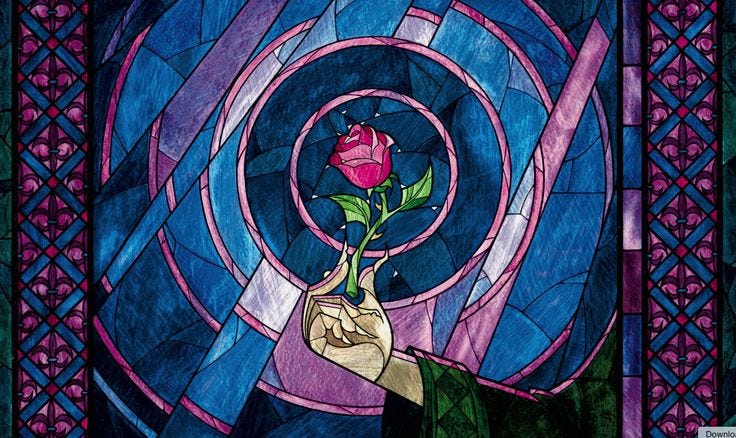
Curses in fairytales represent debts. One person, who showed some kind of vice or sin, causes some damage and incurs a curse. The curse is broken when the one who acted wrongly does redeems himself or herself through a selfless act of virtue. The curse is broken by the redemption of the character who acted badly.
A story that gets this logic right is Beauty and the Beast and I’ve written more about it here. The Beast who was cruel to the old woman at his door redeems himself by selfishly allowing Belle to go back home and then later risking his life to save hers. In doing so he breaks his curse and becomes human again. In Frozen, Anna never did anything wrong. So her getting cursed was already incorrect.
In the original story, Kay is captured by the Snow Queen because he had the shard of devil glass in his heart which made him vulnerable. Kay’s initial problem was the shard of evil glass in his heart. When Gerda’s tears of true love remove the shard of glass, the cause of the problem is removed. The initial balance of the beginning of the story is restored at the end. No character has “gotten away with” bad behaviour.
In Frozen, Anna was saved by some force of the plot rather than true justice; Anna paid twice despite being innocent, Elsa paid not even once. Elsa had no consequences for being evil, selfish and downright murderous and does nothing to redeem herself. The asymmetry and injustice causes unease to any who watching with an intact moral sense.
Because the resolution was illogical, it broke the rules of fairyland and it did this so that it could elevate a villain as a heroine. You might be thinking, why should a fairytale be logical? But the modern misconception that fairytales are defined by nonsense because they talk about magic, is a grave error.

The Laws of Morality remain consistent in good fairytales
There is a common misconception that “fantasy” automatically involves an abandonment of logic. But no fairy tale can ever work without logic. What’s more, no fairy tale can ever be true, resonant and good if the moral logic within it is absent, or worse, inverted. George MacDonald, the author who inspired CS Lewis and JRR Tolkien with his fairy tales and essays, had this to say about the moral laws of fairyland:
“In the moral world it is different: there a man may clothe in new forms, and for this employ his imagination freely, but he must invent nothing. He may not, for any purpose, turn its laws upside down. He must not meddle with the relations of live souls. The laws of the spirit of man must hold, alike in this world and in any world he may invent. It were no offence to suppose a world in which everything repelled instead of attracted the things around it; it would be wicked to write a tale representing a man it called good as always doing bad things, or a man it called bad as always doing good things: the notion itself is absolutely lawless. In physical things a man may invent; in moral things he must obey--and take their laws with him into his invented world as well.”
George MacDonald, The Fantastic Imagination
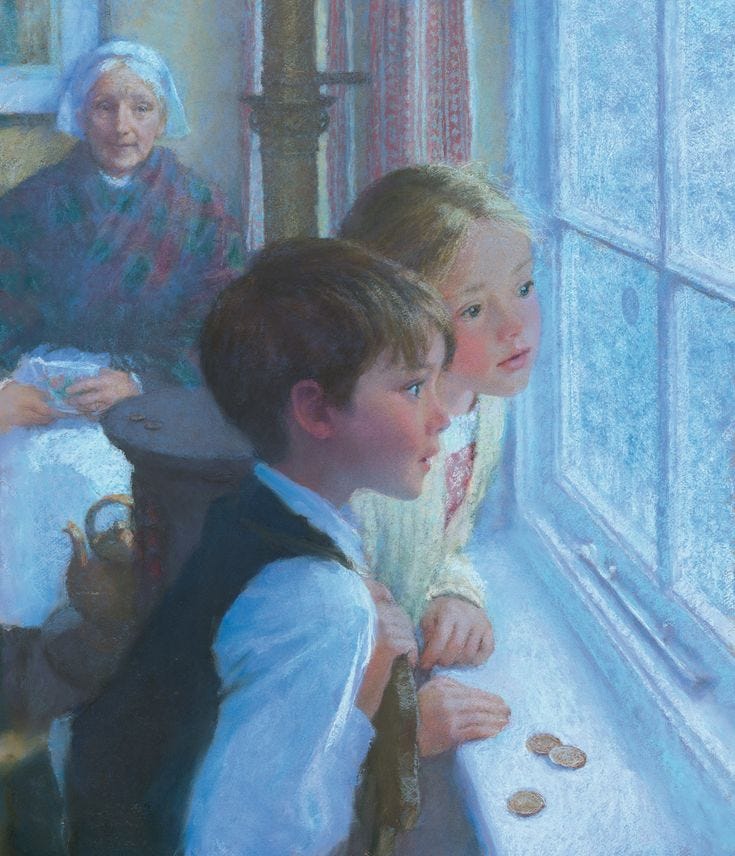
Hans Christian Andersen’s Snow Queen follows the logic of virtue, redemption and love. Faith, innocence and love have their natural consequences, and carelessness, forgetting and cruelty have theirs. The origin of sin and vice is creatively integrated with the devil’s glass. There is a satisfaction both child and adult may experience at the end of Snow Queen which is the detection of true justice. Justice, too, is a virtue and it cannot exist without the logic of prudence and truth behind it.
The Snow Queen’s beauty is not merely decorative, it is substantive and deep. The more a person reads this story, the more truths are revealed like infinite flowers in a rose garden.
Frozen on the other hand twists logic in order to force a narrative; another word for this is deception. In the end of Frozen, the story tells us that Elsa “learns to control her powers through love” but this has no evidence or logic from the plot itself. Anna forgives Elsa but Elsa has done nothing to earn that forgiveness. Elsa sits on the throne of Arendelle having done nothing to prove either her repentance or her competence as Queen. Balance has not been restored. Children who listen to this story and grow to love it because of the catchy music and good animation, internalize its problems in their own lives.
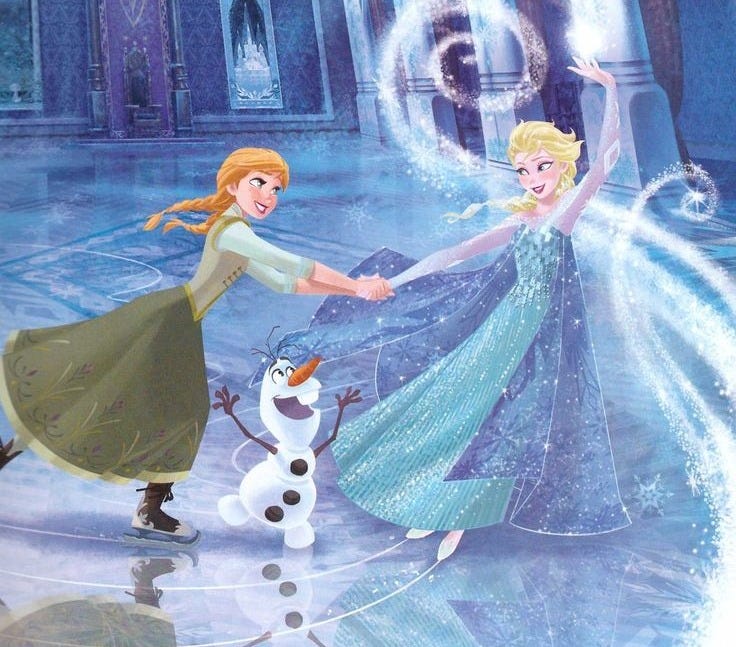
If Frozen has good artwork and catchy songs, they are merely good wrapping paper on a rotten story. Contemplate Frozen with any of the knowledge of eternal virtue and morality in hand, and it falls apart as nothing but a tale of inverted morality, selfishness and idiocy.
Frozen is the inverted image of a beautiful and moral story in the Snow Queen. The devil’s glass will show us many ugly things and call them beautiful, many devious things will be called good. The task is to show our children how to distinguish the inversions from the truth.
The next time you see Frozen merchandise in the story, pushing your daughters to idolise a villain, I hope you spit. And tell your daughters, “that Elsa character was an evil witch.”