
How to Judge Art Objectively - Notes from John Ruskin

Sugar is Sweet; Beauty is Good
We do not contest the fact that all healthy people perceive sugar to be sweet, and yet we do not have any logical reasoning to explain this perception. The matter of the judgement of art as beautiful or ugly is a similar phenomenon, except the perception of beauty is reliant not upon physical health, but rather upon moral health.
To deny one’s moral disease is the primary symptom of it, so those who have the worst judgements of beauty, are the most morally diseased, and the most vociferous in their claims to the idea that judgements of beauty are “subjective”. They claim that what is ugly to one person may be beautiful to another so there is really no meaning to beauty and ugliness anymore. One of the most morally diseased people in the world, Frida Kahlo, expressed her malaise best when she said “La belleza y la fealdad son un espejismo” meaning, “beauty and ugliness are a mirage”. It is because of this disease that Kahlo never made a single work of beautiful art in her life and is another charlatan pushed on the population to demoralise us with the ugliness of her work.

Is there a place for ugliness in art?
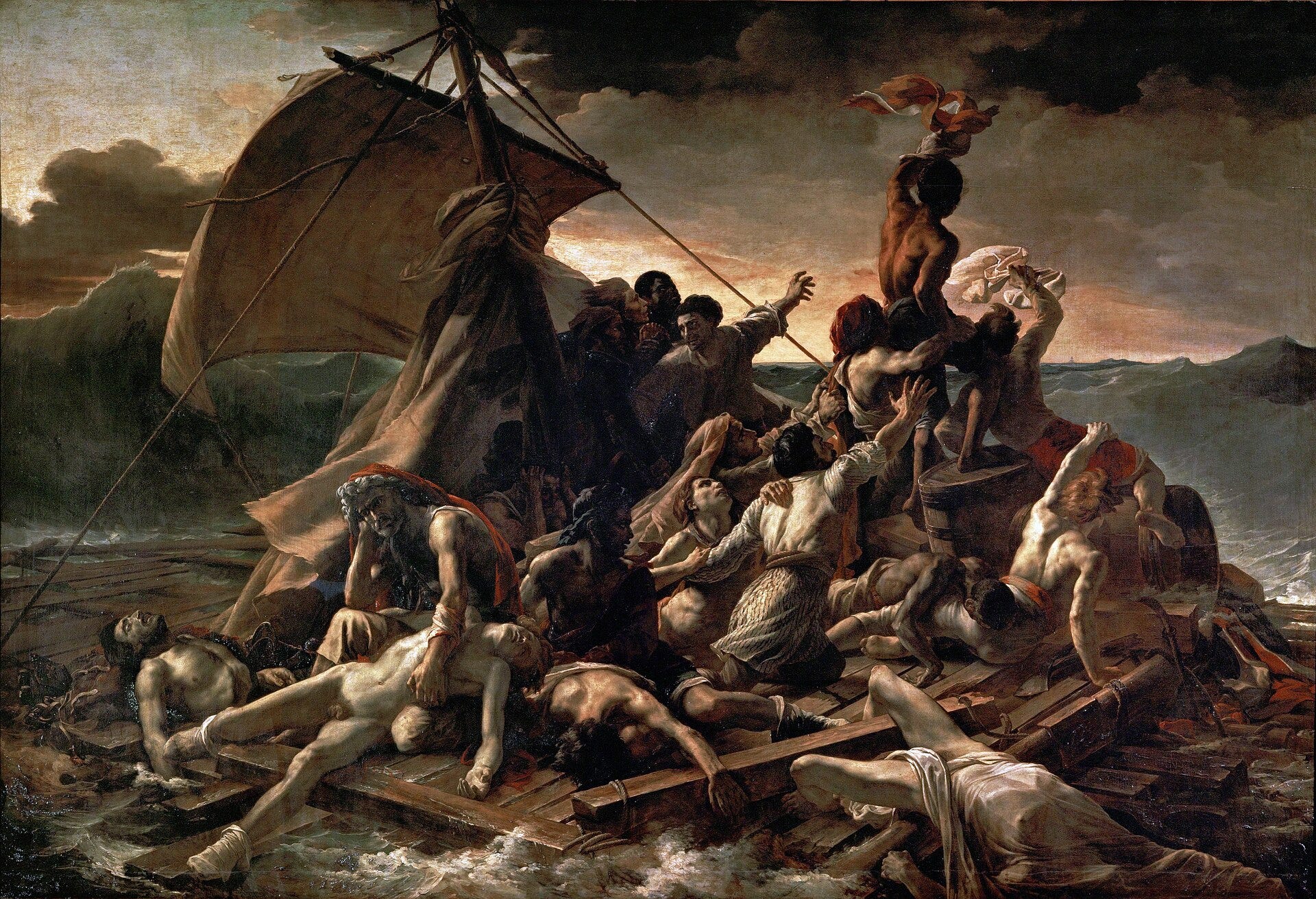
However the purpose of art is not merely to give pleasure to the senses and the intellect in the form of beauty. There is a place for ugliness in art when that ugliness plays a part in a story about something true, noble or good. The Raft of Medusa (1819, Theodore Gericault) is a painting which includes figures modelled from actual corpses, as it depicts the story of a group of fifteen survivors onboard a makeshift raft just moments before they are rescued by a nearby ship. Without the ugliness of the corpses in the painting, it would be impossible to convey the ideas of the harshness of the conditions they endured on the raft when their ship was destroyed, and to convey how desperate they must be for help.
The painting is not made to glorify the ugliness of the corpses, but rather to pay due respect to their story. If the purpose of art is to tell the stories of mankind then art cannot always be beautiful. Purposeful ugliness in art, however, is distinct from modern art that glorifies ugliness as its own end. Modern art uses ugliness to pervert what is good and beautiful and often feigns a nobler purpose which is never evident in the piece itself.
Ordinary People Can be Excellent Judges of Art
In the judgement of art, there are many parameters that may convey value that must all come together to form an overall assessment of a piece. While the ordinary, morally healthy person may have very good instincts with respect to the detection of beauty and ugliness, and of value in general when it comes to art, they are never given the language and tools to articulate these judgements. This is on purpose: if the ordinary person were to be taught how to properly articulate their perceptions and to draw a line of logic from the details of the work that make it good or bad, then charlatans who run the art world would have far less plausible deniability to show wicked and morally depraved images to us and pass them off as “high art”. Exposure to this kind of ugly and wicked artwork is not neutral; it harms our psychological, emotional and spiritual well-being.

The thinker who best provides the language by which we may judge the arts objectively, at least in the fine arts, is John Ruskin.
John Ruskin, Modern Painters
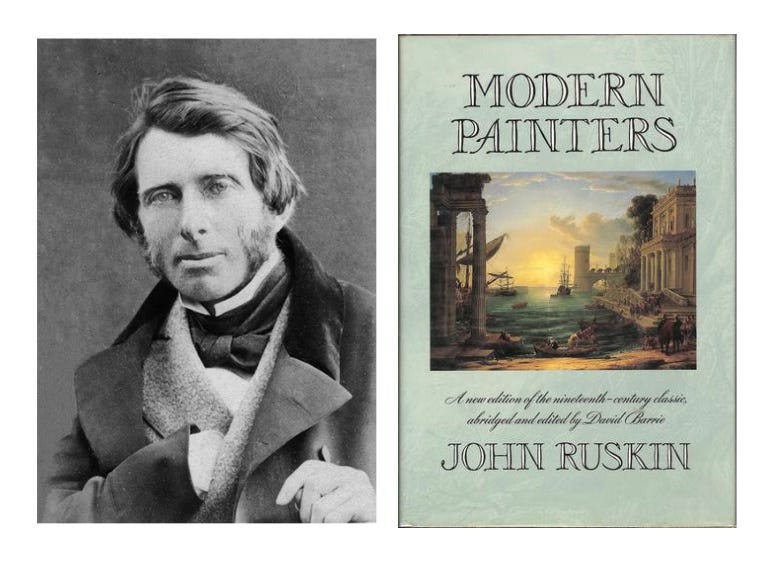
Modern Painters is a five volume book written by English writer and art historian John Ruskin in 1860. This work of literature has influenced artists such as JMW Turner and the entire Pre-Raphaelite Brotherhood. Here I would like to enumerate, paraphrase and explain some of his very useful and interesting ideas about how we may judge and then articulate our judgements of art as ordinary people with good moral sense such that our words may nurture a healthier culture for our children to grow up in.
Art is Measured by Good Ideas
