
How to Teach your little child About Art
Simple teaching methods to connect your child to Beauty

The teaching of art has become somewhat of a joke because modern pedagogy defines art so loosely that it has lost all meaning. Art for children is nothing more than making ugly crafts out of garbage, or letting the child “express himself” with zero direction because art is “about expression”. I am a visitor from the Old World, and I am here to remind you lovely people that there is a precise definition of Art and a precise way to teach it properly such that our children can come to appreciate the Beauty, Truth and Goodness within it. I volunteered for six years as an arts and crafts teacher for children staying with the Ronald McDonald House (a charity for long term pediatric patients) and learned a lot there about how children learn and engage with art.
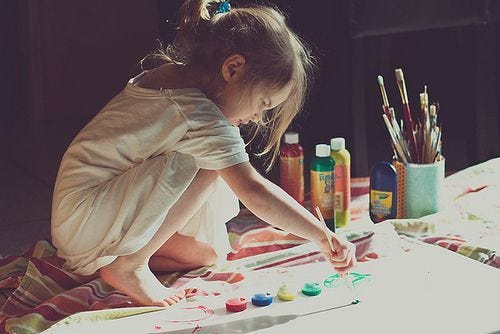
Without further ado, here are some simple strategies and methods to teach your child under 5 about True Art.
Picture Study
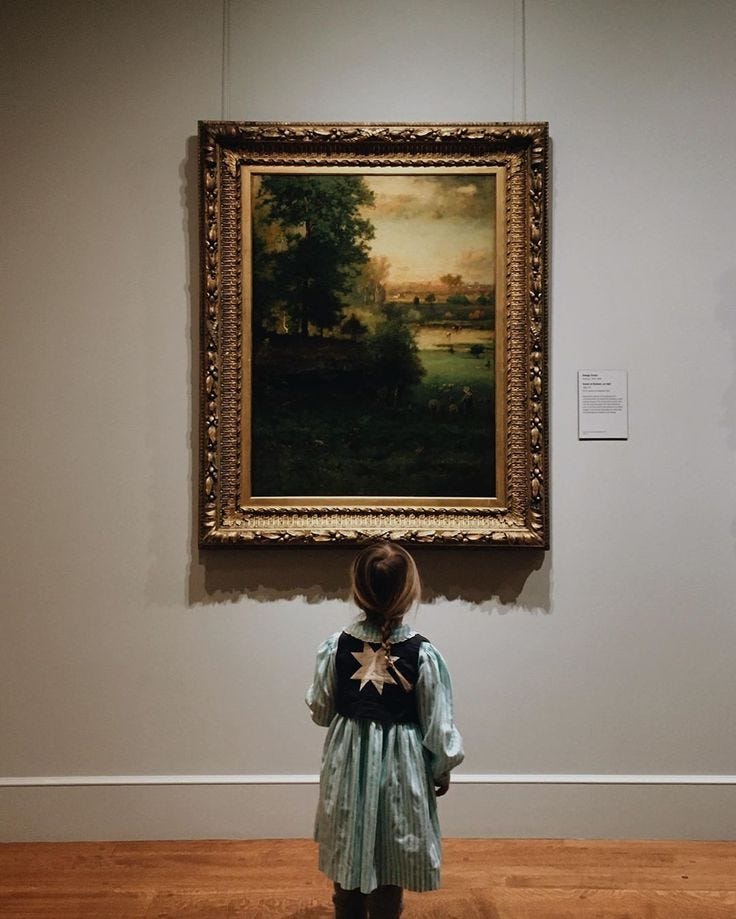
This is perhaps the easiest method and also the most important one. I learned it from Charlotte Mason but many esteemed educators recommend this method. The first step to educating a child about Art is to help him to develop taste and to grow to appreciate the inherent beauty in great art.
Picture study is very simple. You simply get high quality and high resolution prints of some beautiful works of art, and use masking tape to put them up on a wall at the level of the child. It could be in his playroom, in the living room, in the hallway, even on the fridge. You may laminate the picture so that they don’t put sticky fingers on it, or colour on it etc as little children are known to do.
This picture should be left up for at least three days. I prefer to leave it up for a week. Because it is high quality art that you will be printing out, you will find that children will return to it over and over again to examine details, and notice new things every time. Children have a much shorter attention span than adults, so allowing them more time to look at an image, to come back to it over and over again, is a wonderful way to work with the limitations of a tender young mind.
Look at the image with the child and, if they can talk, ask them to point things out to you that they notice. They may not talk right away, so give them time to collect their thoughts and form their words. You can point out things that you like in the image and by describing them, you can give your child words that they can use in the future.
The loveliest part of this exercise is that it helps to give you moments of pause where you and your child can exist as friends rather than always be concerned with entertaining them. You will find that you too will enjoy taking time out of your day to truly look at a work of art.
I will include in a future essay, a comprehensive list of artists and links to artworks that I believe work extremely well for picture study. For now, some artists I recommend, especially for the mind and sensitivity of children are: Kinuko Y Craft, Beatrix Potter, Viktor Vasnetsov and Frederick Leighton.
Fill the Child’s World With Beauty
An extension of the Picture Study method is to fill your home with beautiful things such as paintings on walls, decor that is beautiful and human, carpets, tea-cups, flower pots, gardens. Fill the child’s world with as much beauty as you can, and it doesn’t have to be expensive! Don’t succumb to what corporate soulless institutions tell you that a child’s world ought to look like; you don’t need to decorate everything with elmo, frozen and bluey and whatever other ugly cartoon they are trying to sell. Simple, well executed and beautiful images and harmonious objects that are not made of plastic will do: a wicker basket, a water colour illustration of a sailboat, an ordinary teddy bear with a red ribbon around his neck, a wooden train set.
Take your child to beautiful places such as parks. I have lived in Dubai where beautiful parks are not a walking distance away but I made an effort to take them out at least once or twice per week to a beautiful park where children can frolic among flowers and beautiful landscapes. Children are as happy with beautiful environments as adults are, but it is more impactful for them because it forms their idea of the world! Even taking your child to the beach or someone’s backyard with a very lovely vegetable garden is a big deal. Art museums can be good too, but that goes without saying!
Fine Motor Skills
When you look at the x ray of a child’s hand and compare it to that of an adult’s you will notice something very important when it comes to education: the adult’s hand has bones that are all connected to each other whereas the child’s hand has lots of space between the bones. The child’s bones have not fused yet and there is lots of “squishy space” between them. This is why children have such lovely dimples on the back of their adorable little fists. The other effect of this biological difference is that little children literally cannot exercise the same fine motor skills that adults can and so when they hold a crayon or a paintbrush, they will not have the ability to be exact.
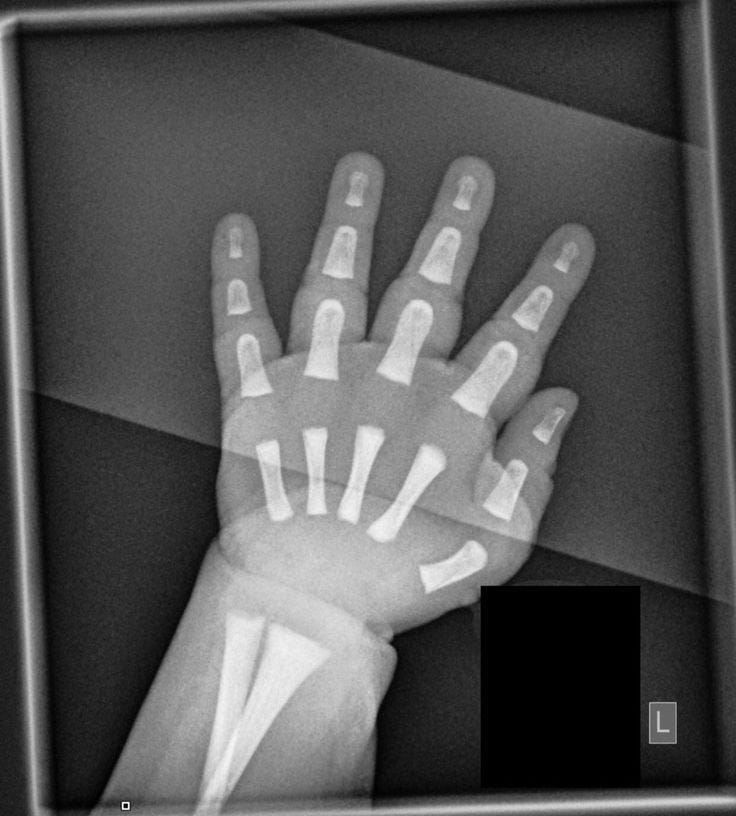
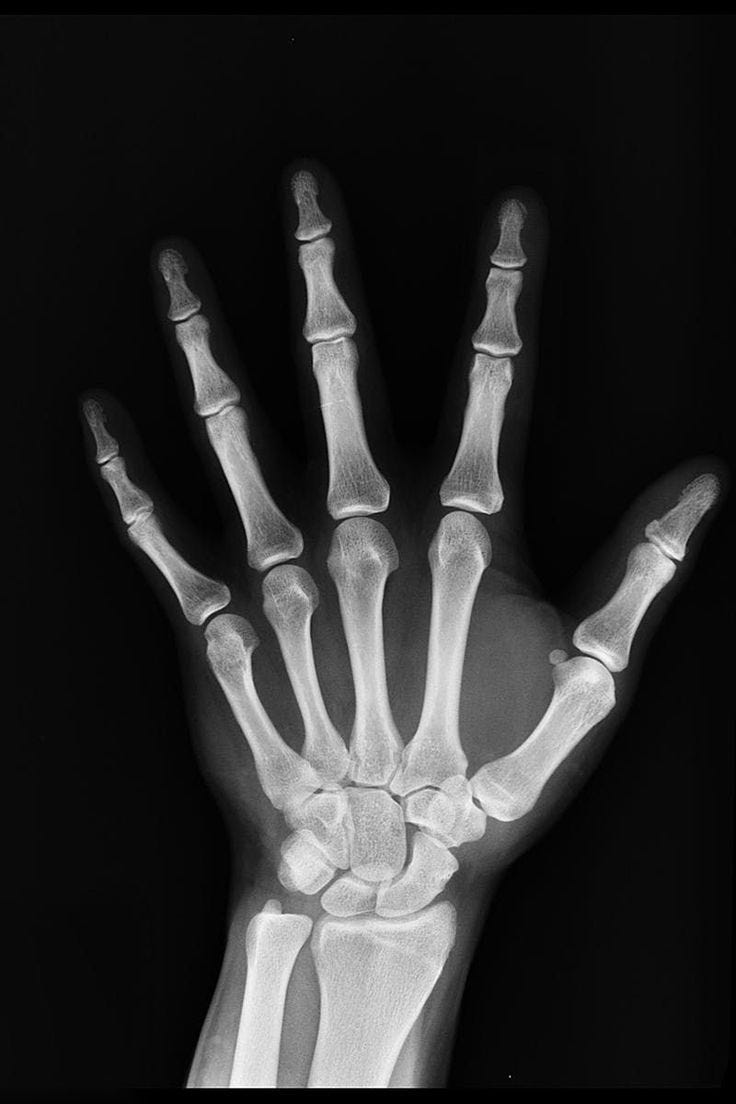
Nevertheless, it is very important to give children the opportunities to practise these fine motor skills and to get used to holding pencils and colours correctly, between the index finger and the thumb of the dominant hand. It is foolish to try and change the child’s dominant hand, by the way. Hand dominance is as inherent as eye colour!
Do not give a child finger paints because they might eat them. For the child of 1-2, give them crayons and a blank page and let them explore the effect of putting a colour to a page. It is very important to give them traditional media rather than ipads because children need to learn from interactions with the material world rather than simulacrums of the natural world. Simulations are best served as tools for the experienced rather than as primary contact points for children just getting to know the real world.
Crayons and pencil crayons are excellent for building this fine motor control. When the child is a bit older (about 3) you can give them water colours and a paintbrush. Give them colouring pages, by all means! But do ensure that these colouring pages are well drawn images and not horrible looking cartoons made with little care to form, shape, or beauty. (No colouring books from popular cartoons, I have noticed, have any sense of beauty about them). I really like the old Disney colouring books as well as colouring books with simply well drawn animals and plants. In the future I will link to some examples of companies and artists that have put out some good ones!
Drawing from life and paying attention to the world
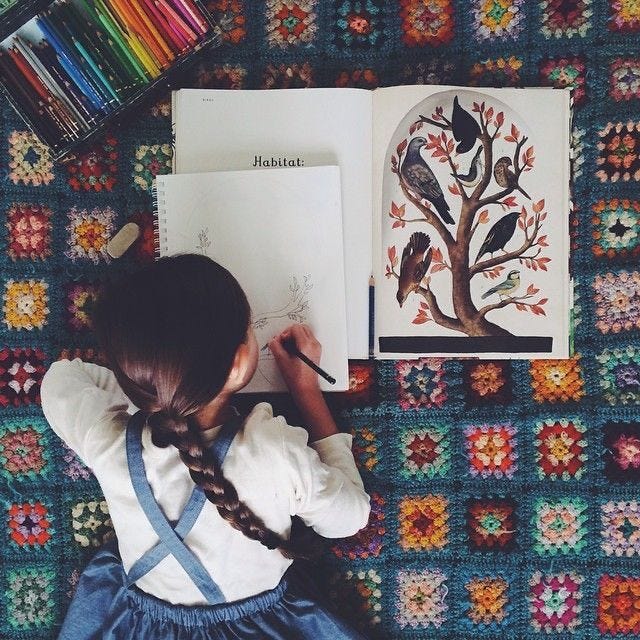
When the child is above three, he should have his own little drawing book and it should not be for scribbling. The child should be encouraged to copy and draw shapes such as lines, circles, squares, as best that he can. He should be encouraged to try and draw things that he sees in life, or illustrations that he has seen in picture study or in his books. He may, of course, draw from his imagination, but the more and better that he can draw from life, the better he will be able to execute the lovely ideas from his imagination! Drawing something as simple as a dandelion he saw outside, a sea shell he collected at the beach or his own house, as best as he can, is an excellent exercise in teaching the child to see and pay attention to his physical world. This skill transcends across disciplines and is not merely useful in the learning of art of everything. A child that cannot attend is a child that cannot learn.
You should try this for yourself. The next time you see something beautiful, try and draw it as accurately as you can and you’ll find that your ability to pay attention and notice details about everything around you expands.
Mixing colours
Children can and should be taught how to mix colours and water colour is the best medium for this. When the first colouring books were released, children were taught how to mix the colours that they would need for each picture. Children from the Old World were held to higher standards than they are today.
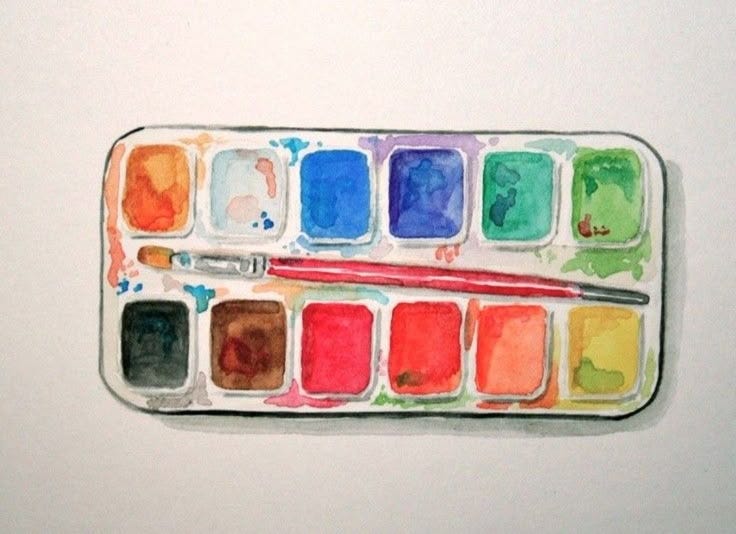
Teaching children to mix colours is very straightforward. There are three primary colours: red, blue and yellow. These colours can be mixed to make secondary colours. Red and Blue make Purple. Blue and Yellow make Green. Red and Yellow make Orange. Experimenting with water colour to see how these colours can be created is a wonderful experience for any person when they first do it, and the practice of making these colours themselves will allow them to find more challenge and thus satisfaction in any colouring that they do.
Children should be encouraged to paint and draw the world as they see it rather than “however they feel like it” because the cultivation of the imagination requires a child to have experienced and attended to the real world in some serious way. In order to imagine we must first see. Painting a tree purple because that’s how it happens to look in that atmosphere in the distance is the true cultivation of the artistic instinct. Whereas colouring things “however you want” is simply the cultivation of a petulant lack of discipline that is only destructive and therefore can never be “imaginative”. Later, when the child is drawing things from his own mind, he can colour things as he imagines them to be and the imagined details will have a rhyme and a reason behind them. “I imagine that a dragon has breathed fire on the forest and that’s why all the trees are black”
When people are older, the teaching of art is often segregated between the teaching of “Art history” and the teaching of “art techniques”. However I believe that you cannot learn one without the other. Both these disciplines are nourished by learning to see the world around you more clearly.
Nurturing a Love for Art
To teach children about Art well has a few key components to it. First, the children must be taught to see and appreciate beauty both in art and in the world around them. Next, the children must be taught to develop their fine motor skills, slowly and at their own pace, so that they can see how they can make their mark in the real world, on the physical page, with a pencil, a crayon or a bit of paint. They must learn not only to make random marks, but to control these marks that they make and this is the cultivation of the child’s mind rather than simply his impulse. This is what distinguishes my ideas from the mainstream pedagogy that just creates artless barbarians with no respect or love for beauty. Art, especially art for children, doesn’t have to be formless and thoughtless.
Children should be taught shapes, colours, line and how to copy from their world properly. There is a method to all of these skills and until very recently, they were taught to children properly. I could write a whole book about all the different skills that can be taught quite successfully to a child!
This article was a very small introduction but I hope that it might lead and nudge you in the right direction as a parent or as a teacher or as a loving aunt, uncle, cousin, grandparent, or even to re-teach yourself about True Art!