
Kiki’s Delivery Service and the Good Female Protagonist
Female-centred stories don't need to be terrible

Far out in a city by the sea, a sweet young witch with a red ribbon in her hair and her cheeky black cat, fly into town by the light of the silvery full moon. This is how the story of Kiki’s Delivery Service begins, a hand-painted animated film released by Studio Ghibli in 1989.
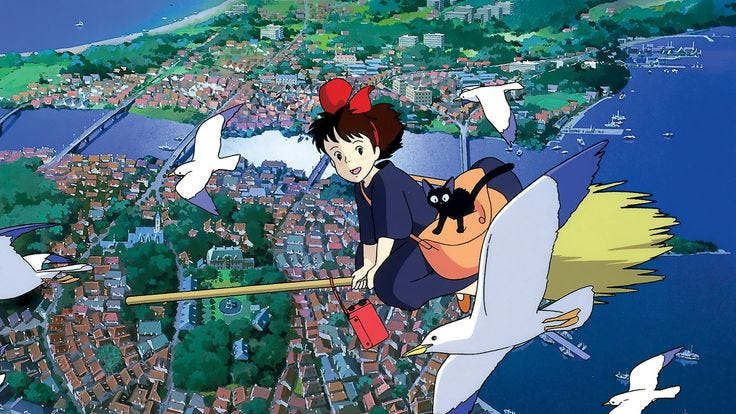
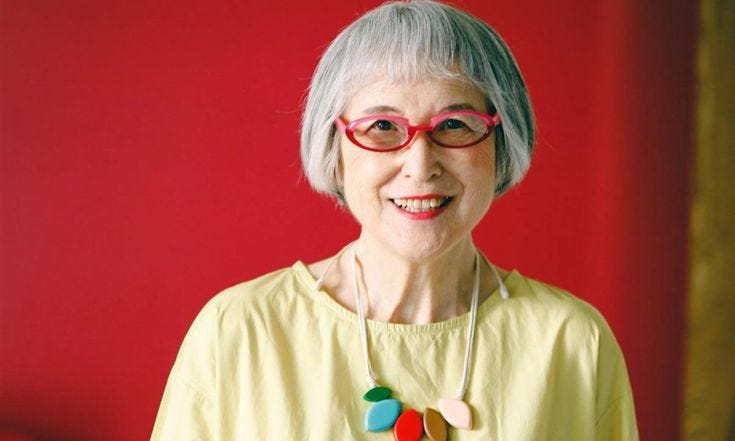
The story is based on a novel called Majo no Takkyūbin or “Witch’s Express Home Delivery” written by Japanese children’s book writer, Eiko Kadono in 1985. Kadono was inspired by watching her daughter play around and pretend to be a witch flying on a broomstick. I found this detail so personally touching because many people say that motherhood is the end of a woman’s artistry and creativity but like Kadono, I too have found my children to be my greatest inspiration. Kadono has written more than 300 children’s books and is now ninety one years old, but she got her start as a young mother in her early thirties, chasing her toddler around while trying to make time to draw and write.
I recently watched Kiki’s Delivery Service about ten times because my daughters loved it so much. Watching it that many times with them over the last several weeks has allowed me to understand something profound and important about what makes this story so much more powerful and beautiful than American attempts at “female-centred stories” that just...fall flat and feel fake. Many critics of Feminist controlled modern Hollywood contend that the stories of modern Hollywood/Disney are bad because they centre women, but movies like Kiki’s Delivery Service reveal to us that this is not the case. Female-centered western stories fall flat because their female protagonists lack virtue.
