

It is impossible not to notice that those who are getting the most “help” with their mental health are the ones who tend to suffer the most. It is worth asking, then, whether this help is possibly making things worse for them. People quit cigarettes more easily than they quit their psychiatrists and their pills and they’re still miserable.
The mainstream ridicules traditional wisdom to maintain your mental well-being as being “uneducated” and “insensitive” to the realities of mental illness. More importantly, the clinical model of mental health insists that it is a biological problem which requires biological solutions and so rejects the “psyche” part of “psychology”. Psyche means soul, an immaterial aspect of the person, and the art and science of making the soul is the subject of virtue, something totally lacking in modern discussions of therapeutic techniques.
No mentally ill person is ever told by a psychiatrist or therapist that the origin of their problems is ever a moral failing that they have some agency over. Traditional wisdom teaches us how to guard our thoughts from the kinds of self-defeating narratives that lead us to vice, and it also teaches us that focusing all the time on how we feel is not a healthy thing in the first place.
It is much easier to assume the person doing well has been given mental health freely, like a random gift, rather than having exerted any effort. Because that might mean those who are mentally ill, are simply not putting in the work.
This “traditional wisdom” will offend many who have fully accepted the modern biological framework of mental health. But let us put aside our opinions for a moment and look at results. Treating mental illness like a biological disease doesn’t seem to be helping; both the incidence and prevalence of mental illness has exponentially increased and research in the field functions only to generate more illness with more extensive categorization.
What if employing that traditional wisdom of mental health helped people better? The first part of that wisdom says that deciding you want to be well is crucial first step. For many people, their misery and darkness is quite a comfortable identity and it protects them from the pain, humiliation and effort of taking agency.
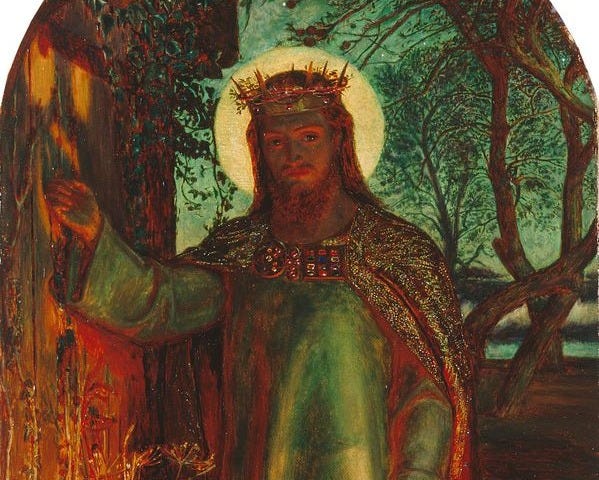
If you’re not ready to decide to be well, not even a fleet of doctors, a trillion dollars, the most perfect drugs or God Himself will be able to help you. You have to open the door first.
“In the back of this edition of the DSM are the revisions from the last edition. Already, the rules have changed. Here are the new definitions of what’s acceptable, what’s normal, what’s sane. Inhibited Male Orgasm is now Male Orgasmic Disorder. What was Psychogenic Amnesia is now Dissociative Amnesia. Dream Anxiety Disorder is now Nightmare Disorder. Edition to edition, the symptoms change. Sane people are insane by a new standard. People who used to be called insane are the picture of mental health.” Chuck Pallanhuik, Survivor (1999)
The Cultural Inflection Point of “Mental Health” in the Western World
