

“propter vitam vivendi perdere causas” - Juvenal
(To destroy the reasons for living for the sake of life; to squander life’s purpose just in order to stay alive and lead a meaningless life)
When we no longer study something for the sake of gaining a credential or a job or social status, we begin to see the true value of the subject of education and Art has shown its true beauty to me in this way. I did not learn the names of artists to impress people at parties, or the stories behind sculptures in order to sound intelligent to others. I did not earn a degree and the arts are not well known as a subject of study that leads to a job.
When I learned Art, it was for a much more ridiculous and serious reason: a love of life. I was drawn to something beautiful and wanted to get to know it better, just as a man might want to say hello to a beautiful woman, or a hiker might stop to gaze at a view along his path up a mountain. Beauty stops us, makes us pay attention, and we acquaint ourselves with it so that we may enjoy loving it even more.
The study of Art has long been seen as the domain of the idle aristocrat or a decorative degree for the wealthy heiress who must be able to put on a show of being able to create polite and intelligent-sounding conversation. For many people today, the arts are seen as luxury pass times of the wealthy rather than essential components of anyone’s life, unlike medicine, mathematics, law or even languages. After all, how will knowing what Michelangelo created in 1503 help a young man grow up to be able to provide for a family?
However, the idea that art belongs only to the wealthy is a modern phenomenon borne of the industrial revolution. A brief survey of history in all cultures prior to the industrialisation of modern life reveals that everyone’s life was once filled with creating art of some kind. Before the radio, there was a musician in every neighbourhood and family. Before mass production everyone’s mother was a dress designer; a portrait painter could find work in every village. A cobbler, a furniture maker, a smith, all made useful things for people and each useful thing, because it was made by a human being rather than a machine, was beautiful. Even the art of the renaissance, now locked up in museums, once formed a part of the peasant’s daily life. Fra Angelico, Giotto and Michelangelo created artwork to be enjoyed by the masses and used to learn about the word of God when they went to church.
Art is not just a picture or a sculpture to contemplate in a museum on the weekend. Art is a necessary function of every human being, both in its creation and in its appreciation.
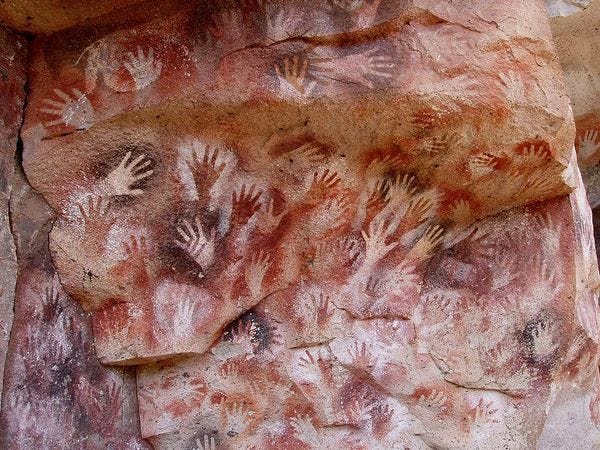
A cave discovered in the Argentine Patagonia reveals handprints on a cave wall placed carefully one on top of the other, stencilled in various colours, more than five thousand years ago. This is called the Cave of Hands. It reveals to us that to create art is something that mankind did even when he was fighting nature tooth and claw for survival. From this simple gesture it is very easy to draw a line to the sculptures of Bernini or the paintings of Velasquez and then to distinguish all three from a banana taped to a wall or pieces of paper hanging from a ceiling. This image on the cave wall tells us precisely what Art is and what it is not.
Art is the impulse of the human being to tell his or her story through material form. This can be done in paint, sculpture, music, writing, or dance. All forms of art are material ways to give language to that which it is almost impossible to rationally describe which is the experience of living life with a human consciousness. We are not quite beasts and not quite gods and somewhere in between we experience in the same mortal body, the gnaw of wrath and the restraint of charity; bone-deep beastly hungers and irrational, self-abnegating love that extends upward and outward. The story of art traces the story of humanity.
What distinguishes this art from non-art is then very simple to deduce. All non-art comes with a long label. The story is not told through the piece itself but rather through an attached label. Every aspect of the “Art-piece” is a poor metaphor for something else and it contains nothing within it that speaks for itself. Work like this is not art, it is rather political clownery.
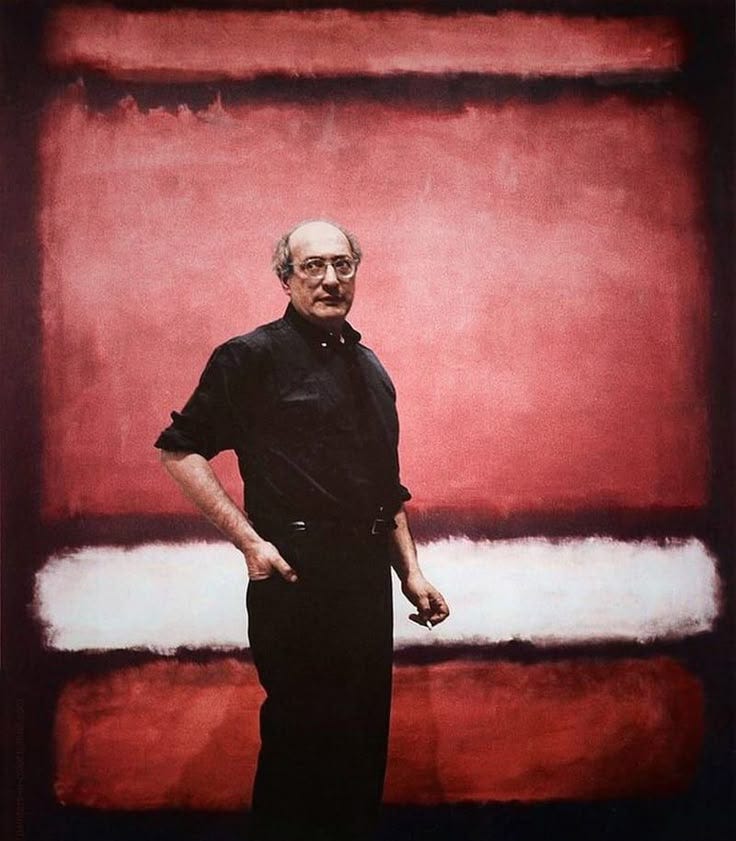
Mark Rothko might have some very nice explanations for his political clownery and the educated classes might call you a barbarian if you think his work looks like a used napkin. Nevertheless, it is clear for anyone with eyes to see that his work does not speak for itself.
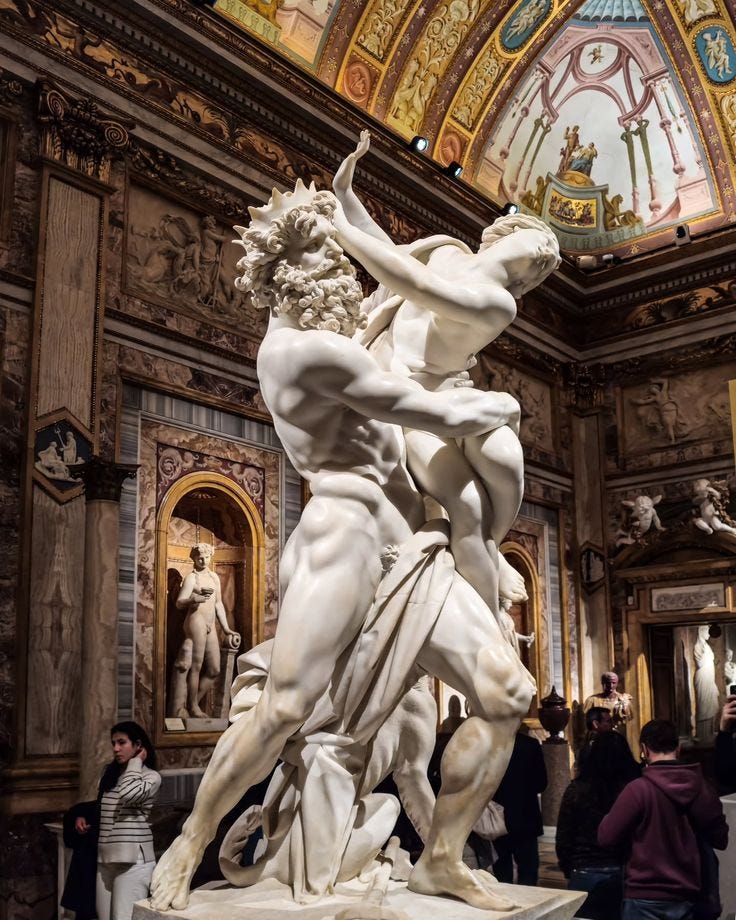
Compare his work to an artist like Bernini. You do not need Bernini to tell you the story of Hades and Persephone to understand what the story is expressing. Through the form of the sculpture itself, we can identify the characters: a powerful man and a beautiful young woman. We can identify their relationship: the man is overpowering the woman but she is resisting valiantly. The overall construction of the piece creates a kind of tornado effect where each angle carries the eye to the next plane of the piece creating a vortex of movement leading to the feeling of a climactic, theatrical moment of dramatic tension. A musician might tell this story in another way, a writer in yet another. Nevertheless, Bernini’s storytelling stands on its own and tells the story on its own merit. Learning more about the story of Hades and Persephone serves only to enrich our understanding of the piece even more.
The purpose of studying art seriously is primarily to bring our attention to great works of beautiful and compelling artwork that tells the stories of humanity with the most excellent skill. While the stories of humanity are universal in kind, they are not universally well told. It is clear that some cultures, some people and some time periods had more skill than others and it is worth drawing our attention on purpose to those who told the human story the best. One of the primary goals of education is to drawn our attention to excellent things and so the goal of studying art is to drawn our attention to excellent art.
When we draw our attention to the human stories that are told well, we can then learn things about ourselves, about others and about the human condition in more thoughtful, nuanced and rich ways. Said another way, we live better. But to even make this argument risks drawing too fine a utilitarian line under the reason we ought to study the arts seriously. Can a person really lead a good life without a bit of beauty to frame narrative of his pain, suffering, triumphs and reliefs? When we fall in love or lose a loved one, the more alive among us look around for a camera to take a good photo, for a writer to provide a few nice words, for song to capture, capitulate and to adorn the moment. No matter how practical we might be, we are human after all, and to be fully human is to search for art.
The truth is, everyone, even those who may pride themselves on not being overly concerned with art at all, are living and breathing art all the time. The difference is that those “practical people” are passive consumers of art, rather than active participants. The pictures on their walls, the design on their plates, the syntax of the emails they write, it’s all background music to them that has been picked out for them and they don’t even care to consider its power over them.
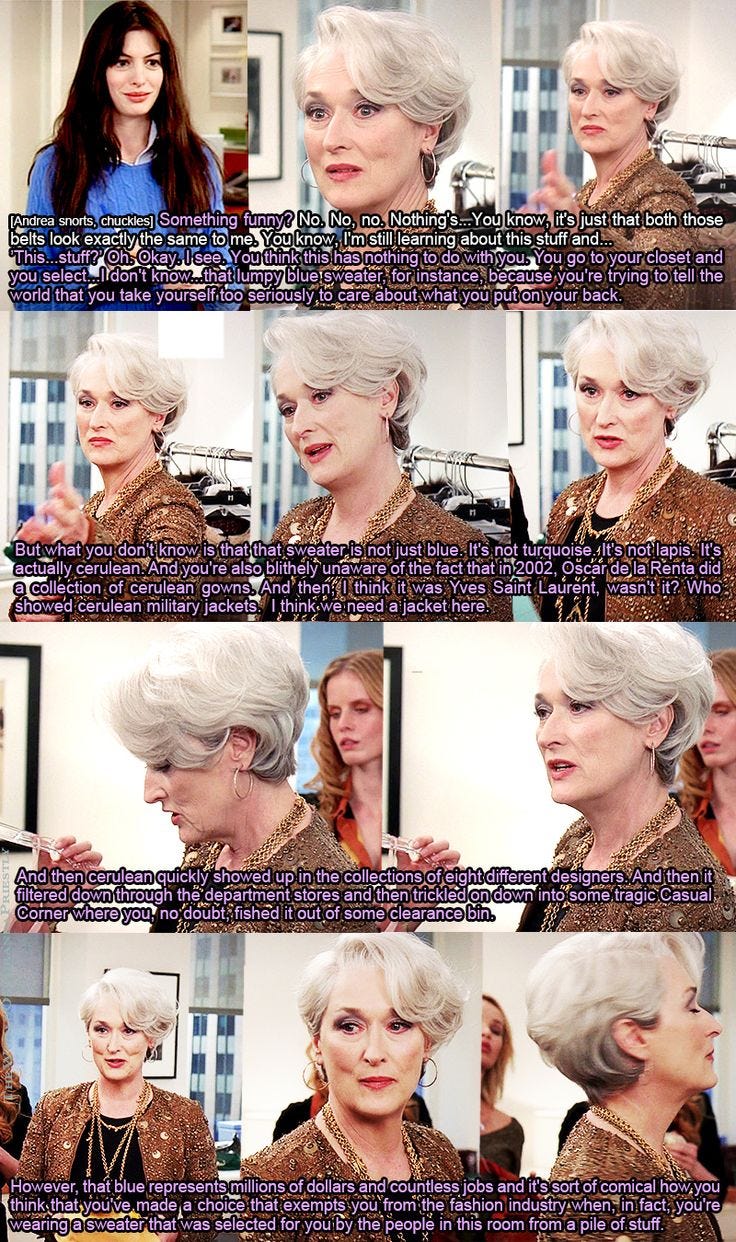
To study art then is to also understand its power over both the individual and the civilisation as a whole. Those who do not understand art are doomed to be enslaved to the taste automatically provided for them. Those who never take art seriously live in the default artistic setting and this leads to default states of consciousness, of thought, of desire and of expectations from life. To truly cultivate taste, consciously and with regard for beauty, harmony and order, is to cultivate a life itself.
There are many who pay lip service to how “beautiful art will save society” but it is not because you’ve memorised some AI generated facts about Tchaikovsky, but because you consider that you may listen to something more beautiful that can show you how a violin may paint the first rays of spring sunshine. It is not knowing the name of the Quattro Fiumi fountain in Rome that may enchant you, but the idea of how Rome at the height of its power captured the greek gods themselves, once high and mighty on Olympus, and brought them under the domain of the Roman Catholic Church.
You do not need to have aspirations to become a painter or an art museum tour guide or a glittering socialite in order to take an interest in art. You need only to have a desire to live life consciously. If this is your desire, then you must take your education in the arts as seriously as any other matters you consider practical. In fact, the telos of all your “practical matters” are directed precisely by your understanding of the human story and your place within it. Will you let others define that telos for you, or define it yourself?
Thank you for reading.